
Aditya Roy
Enterprise AI & Human Systems Architect
Consulting Principal • Innovation Lab and Capability Leader • Practitioner-Author
I work at the intersection of functional HR, workforce architecture, organizational change, enterprise technology and applied AI. Over more than twenty years, I have progressed from delivering HR operations to designing global workforce systems and building intelligent architectures for complex, regulated organizations.
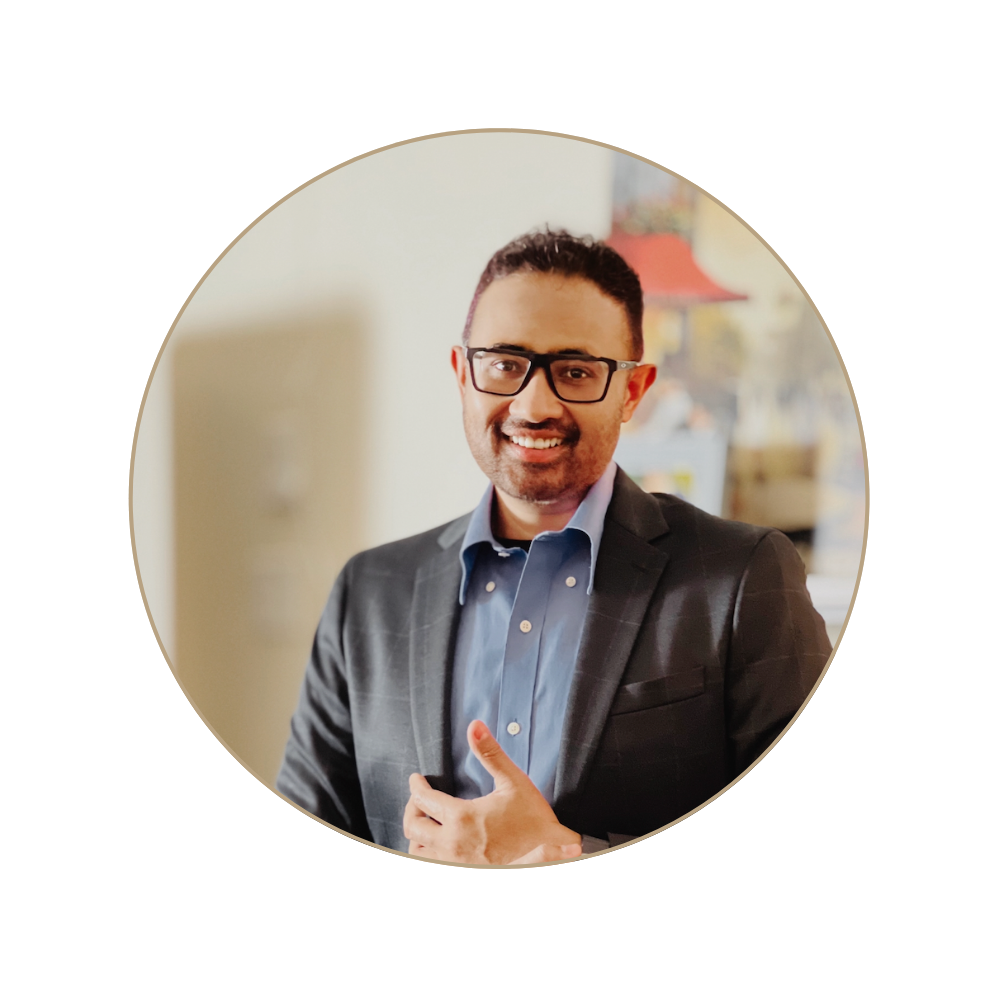
Professional snapshot
- 20+ years within one Fortune 500 organization
- Progressed from analyst to consulting principal
- Workforce systems serving approximately 375,000 people across 40 countries
- $12M+ in repeat growth over four years
- Leadership responsibility spanning consulting delivery, capability development and innovation
- Consulting Magazine Top Consultant, 2023
- Master’s degrees in Economics and Management
- Enterprise experience across India, Asia-Pacific, Europe and North America
What I do
- Enterprise AI and Human Systems: operating models, decision architectures, responsible AI and human oversight
- HR and Workforce Architecture: service delivery and talent systems, skills, workforce intelligence and employee experience
- Organizational Change: change strategy, organizational design, adoption and behavioural systems
- Enterprise HR Technology: Connected HR ecosystems such as Workday, Oracle and Avature.
- Innovation and Capability Leadership: prototypes, reference architectures, consulting assets and practitioner development
From HR Practitioner to Human Systems Architect
For more than twenty years, the work has unfolded within one Fortune 500 organization. I began as an analyst and gradually found my way into increasingly complex roles spanning geographies, business domains, and enterprise advisory work.
I did not plan such a long path within a single firm. Looking back, I see it as a mixture of design, circumstance, and serendipity. More than anything, it has been a privilege. I began close to the everyday realities of functional HR and later had the opportunity to help design the systems through which those realities are managed. Along the way, colleagues and clients trusted me with some of their most difficult problems, closely held concerns, and hopes for what their organizations might become.
That continuity has allowed me to sit on both sides of the table: as a practitioner responsible for delivering the work, and as an architect reconsidering how the work itself might be designed.
The impact of my work has been across India, Asia Pacific and ANZ and Japan, Continental Europe, and the Americas. I have built for Cognizant’s own internal operations and worked with enterprise clients in sectors including financial services, government, and precision manufacturing. I also conceived the product idea that became Cognizant’s Talent Marketplace, which grew to serve 375,000 people, among other Talent Systems.
Today, my work sits at the intersection of two disciplines: the human side of organizational change and the functional architecture of AI within HR systems. I am most at home beyond the strategy deck, in the practical work of deciding how data, workflows, governance, and human judgment must come together if AI is to be trusted inside the complicated reality of a large organization.
I hold master’s degrees in Economics and Management and completed AI Strategies for Business Transformation through Kellogg Executive Education, and Harvard LEAD program among few more credentials. In 2023, Consulting Magazine named me a Top Consultant. I have also had the privilege of spending time with MBA cohorts as a guest lecturer. Their questions, disagreements, and curiosity stayed with me, and helped shape the reflections that run through every chapter of this book.
If your own work touches some of these questions, I hope you find something here that helps you think, question, or design with a little more care. And if it leads you to see something differently from me, that conversation is welcome too. LinkedIn.

Selected professional impact
Global Talent Architecture
Conceived and helped scale a talent-marketplace capability from an initial population of approximately 16,000 people to 375,000 employees across 40 countries.
Growth
Built trusted client relationships that generated more than $14 million in repeat consulting growth over four years.
Innovation and Capability Leadership
Leads an enterprise process innovation capability, translating emerging technologies into working demonstrations, reusable architectures and consulting methods.
Regulated Human Systems
Advised complex organizations across life sciences, government, financial services and other high-accountability environments.
Independent research and public work
Alongside my professional role, I maintain an independent, self-funded body of work in research, writing and software development. This work includes Conscious Cybernetics, open-access books, research papers and reference implementations such as Entropy of Us, Aurora and Athena. It is created on personal time using personal resources and does not represent my employer.
SSRN | ResearchGate | Zenodo | Github | LinkedIn
Education and recognition
Education
- Master’s degree in Economics. Concentration: mathematical economics and econometrics
- Master’s degree in Personnel Management and Industrial Relations
- AI Strategies for Business Transformation, Kellogg Executive Education
- Harvard LEAD
- Relevant enterprise and Agile credentials
Recognition
- Top Consultant, Consulting Magazine, 2023
- University merit recognition and academic scholarships
- Guest engagement with MBA cohorts and academic institution
Current questions
Much of my current work is organized around a small set of questions:
- How should authority be distributed between people and intelligent systems?
- What must remain understandable when decisions are automated?
- How do organizations accumulate dignity debt?
- Can software improve awareness without becoming another instrument of control?
- How can AI preserve institutional memory while remaining open to correction?
The human behind the machine
I grew up in Varanasi, where the river sets the pace and patience is less a virtue than a grammar of life. My career took me through India, Canada, and the United States. The cities changed. Body of work grew larger and more complex, and I kept noticing the same thing: some organizations could move quickly while leaving the people inside them strangely still.
For a long time, I experienced this only as discomfort. The systems were becoming more efficient, but not always more coherent. They knew more about people, yet did not necessarily understand them better.
Twenty years later, I still notice it.
I have simply become better at building things in response to it.